 ScienceSoft Global



Patient Portal Software Development
Overview for Healthcare Providers
Since 2005 in the healthcare IT industry, ScienceSoft plans and implements patient portals for efficient interaction with patients.
Contributors

Healthcare IT & AI Consultant, ScienceSoft

Head of AI, Principal Architect, ScienceSoft
Patient Portals: the Essence
Healthcare organizations use portals to provide patients with convenient and secure 24/7 access to their personal health information (PHI), medical advice, and assistance. A patient-facing self-service portal optimizes communication with a healthcare provider and increases patient engagement in the treatment process. ScienceSoft can develop patient portal software that helps patients access records and communicate with providers.
- Key functionality: doctor visit arrangement, disease-specific modules, telehealth, payments, and seamless integration with the IT environment.
- Costs: from $100,000 to $250,000. Use our free calculator to get a tailored ballpark estimate for your project.
Key Features of Patient Portals
ScienceSoft’s medical IT consultants design the patient portal feature set to match the business needs of each healthcare organization. Below, we describe the functionality often requested by our clients.
-

Patient access to personal health information
- Encrypted and password-protected login to a personal profile.
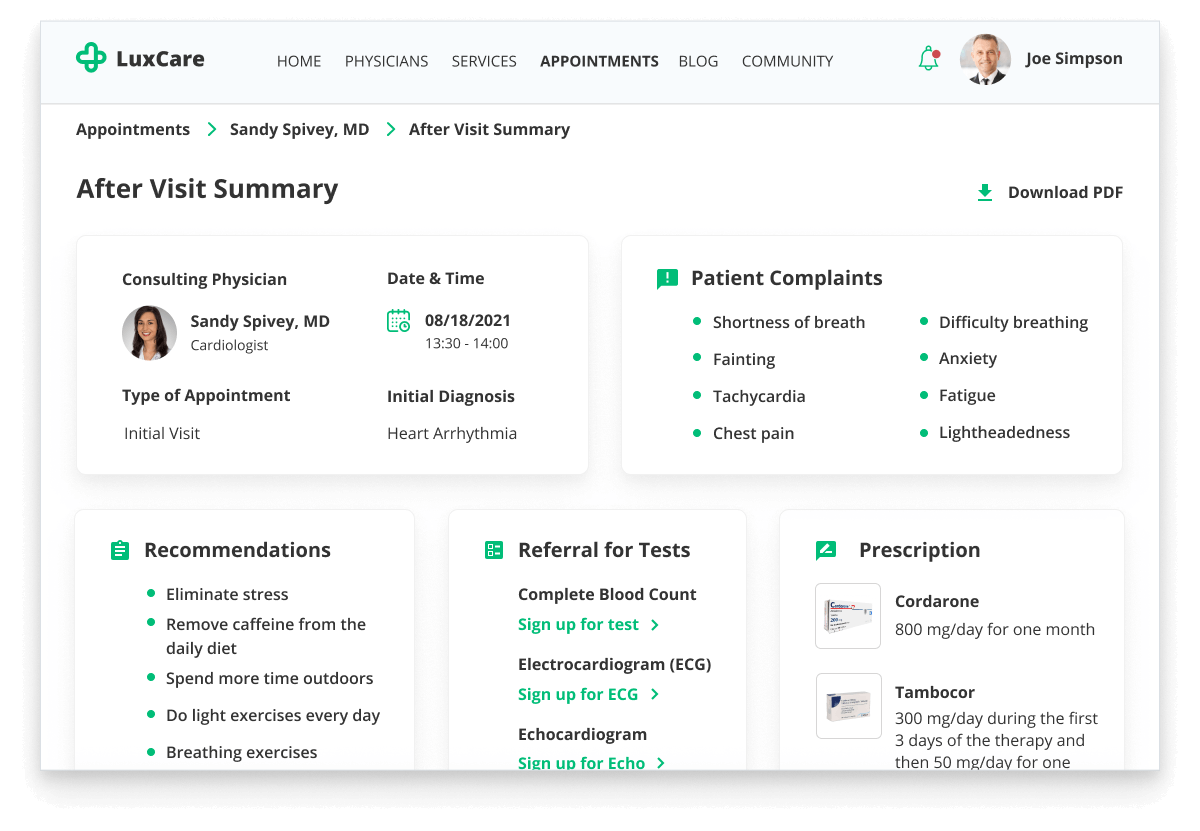
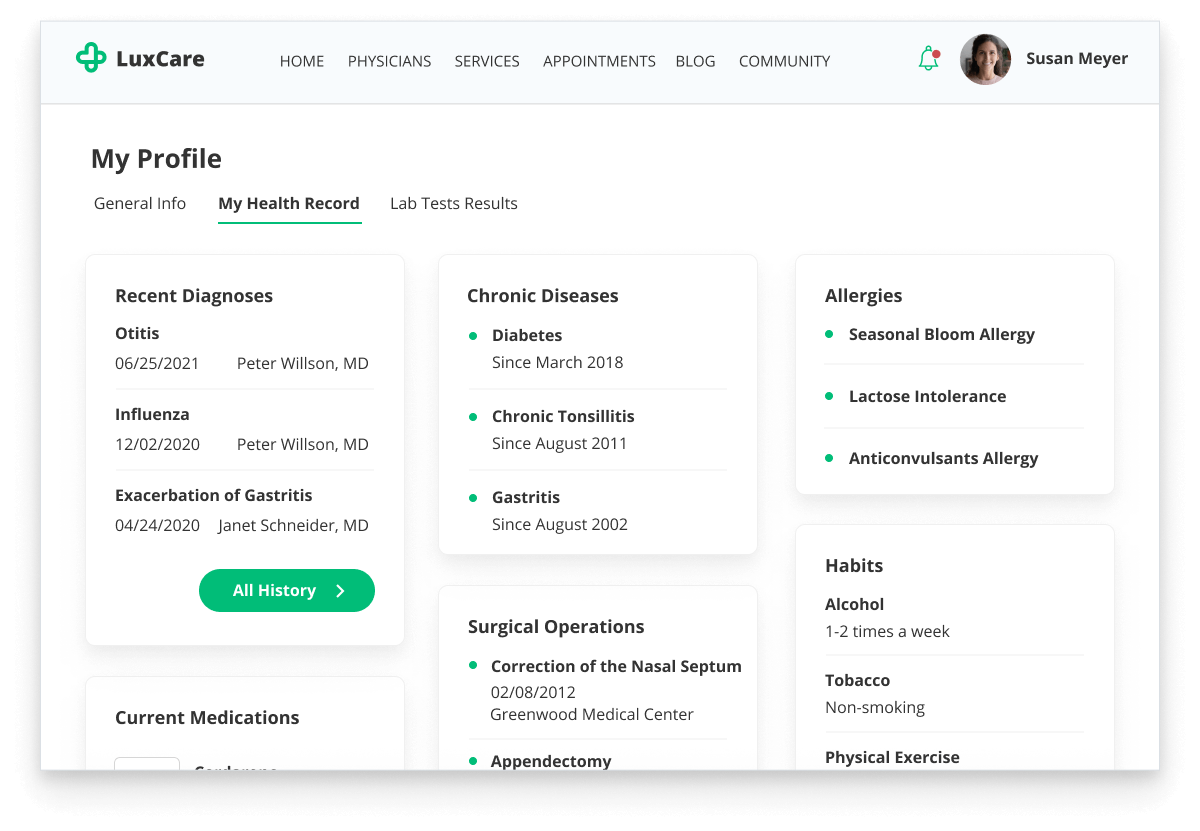
- Health history, diagnoses, allergies, and chronic conditions view.
- Viewing and downloading lab test results and discharge summaries.
- Treatment, procedures, and medication plan view.
- Personalized after-treatment lifestyle recommendations and educational materials to support ongoing wellness and preventive care.
-
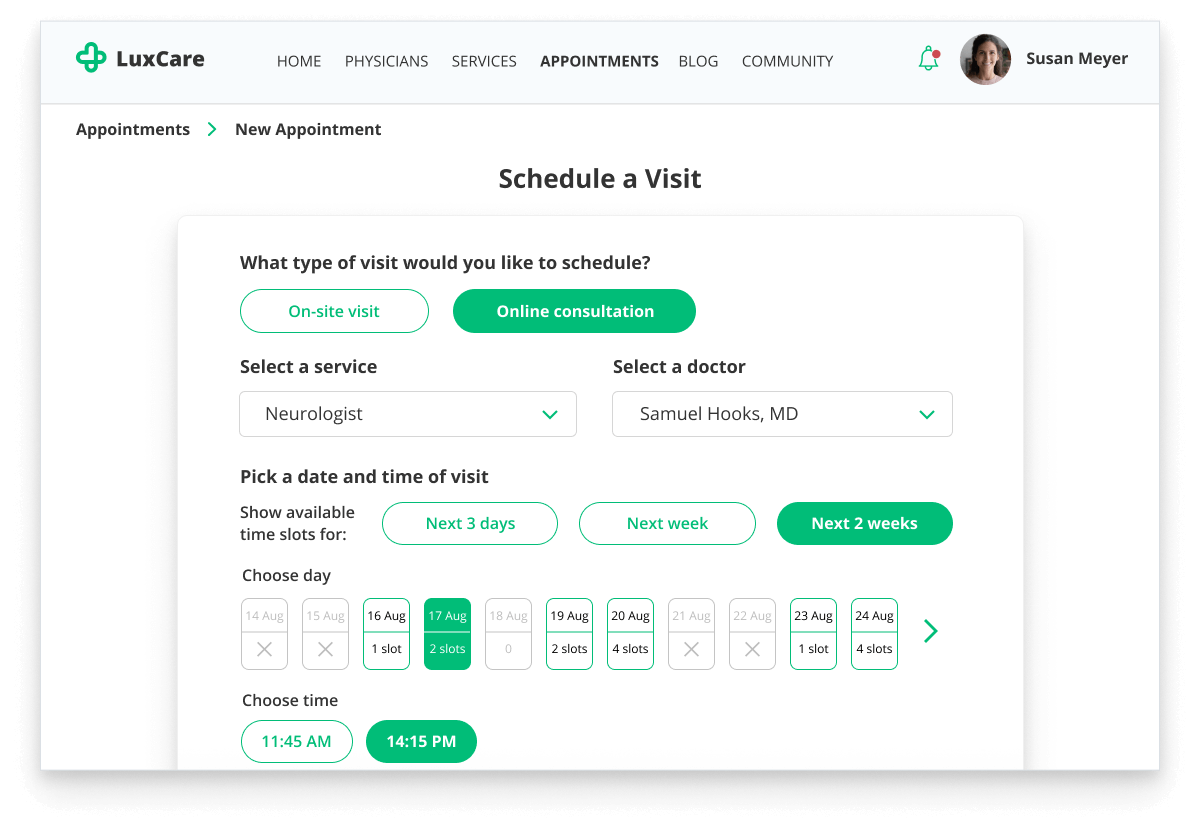
- Scheduling appointments online.
- Upcoming appointments view and ability to re-schedule visits.
- Detailed visit history view.
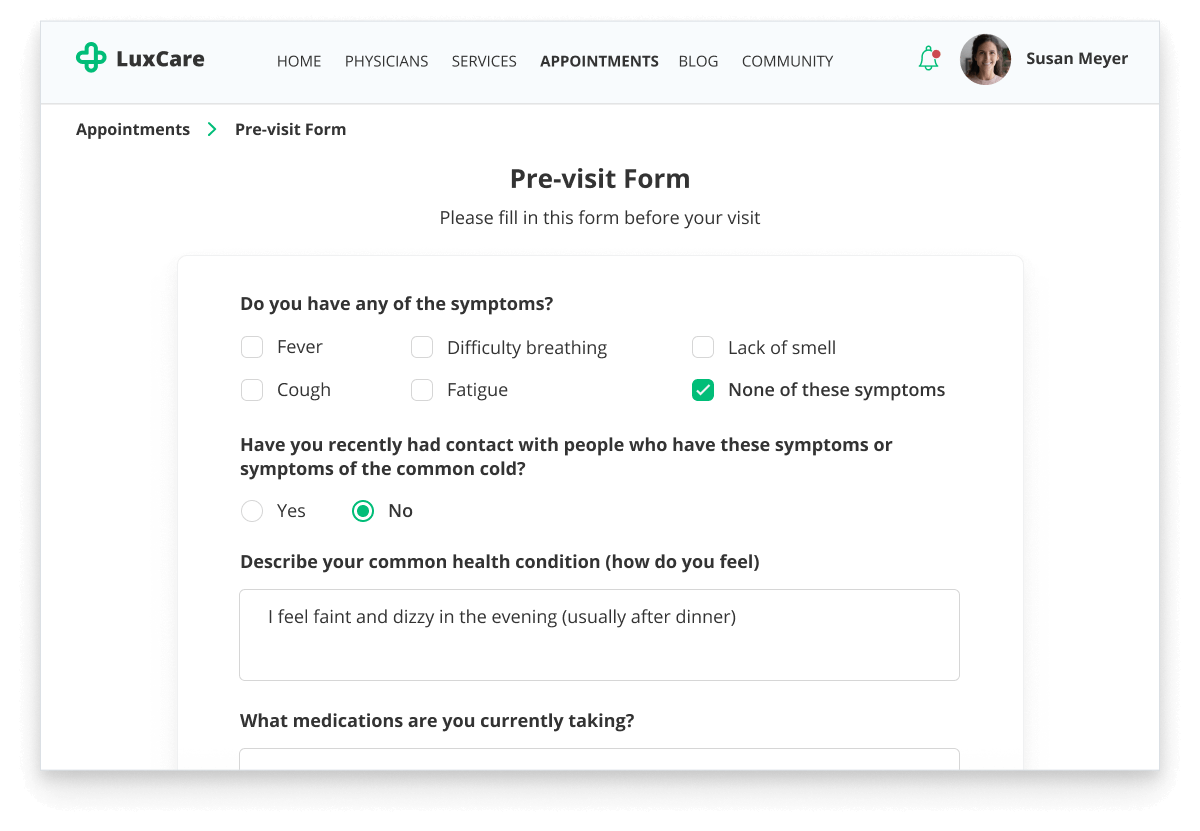
- Online filling in of pre-visit forms.
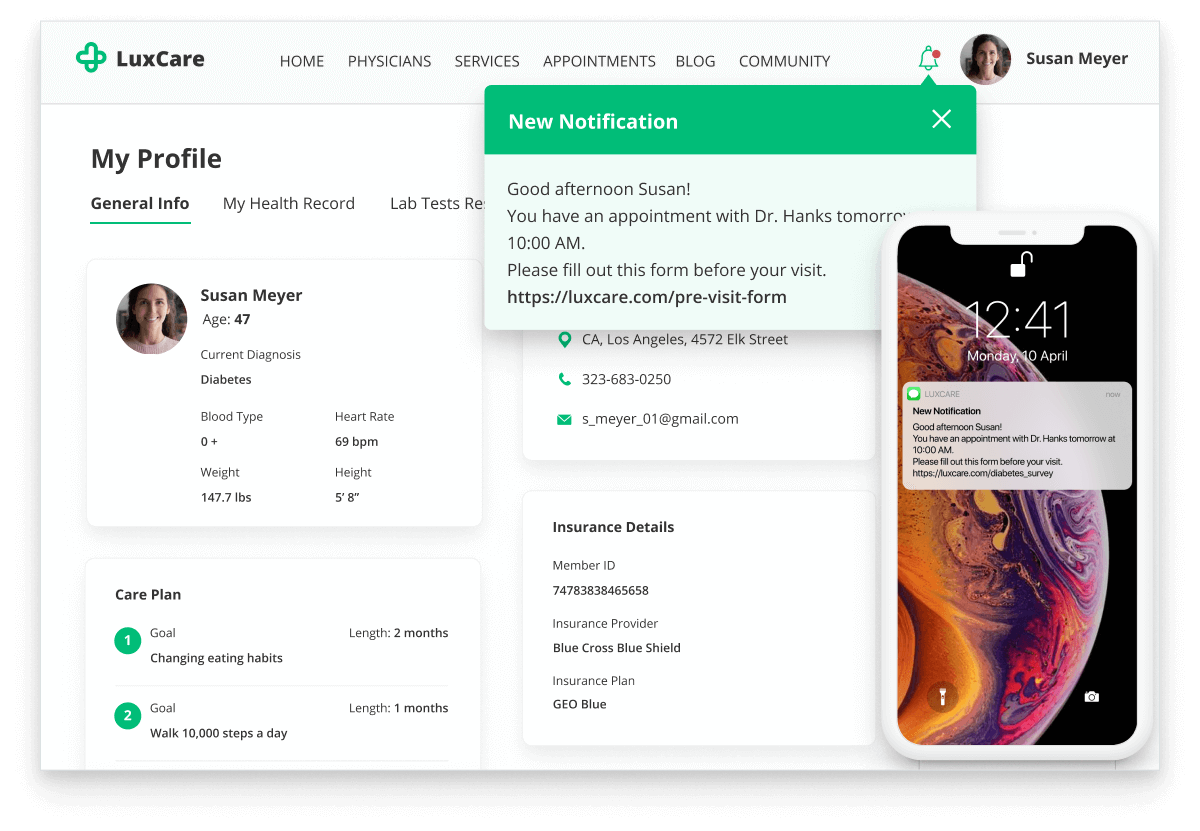
- Automated appointment reminders for patients (via text messages or portal notifications).
-
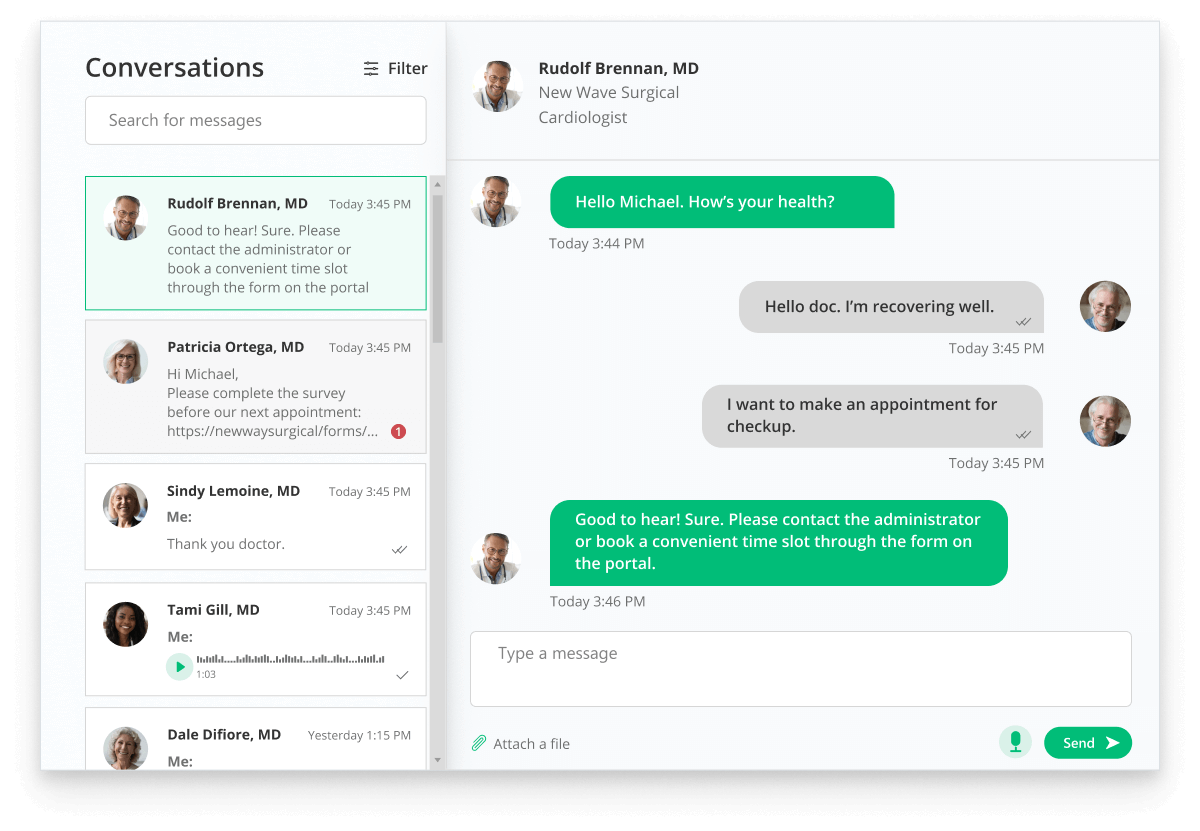
- Messaging between a doctor and a patient.
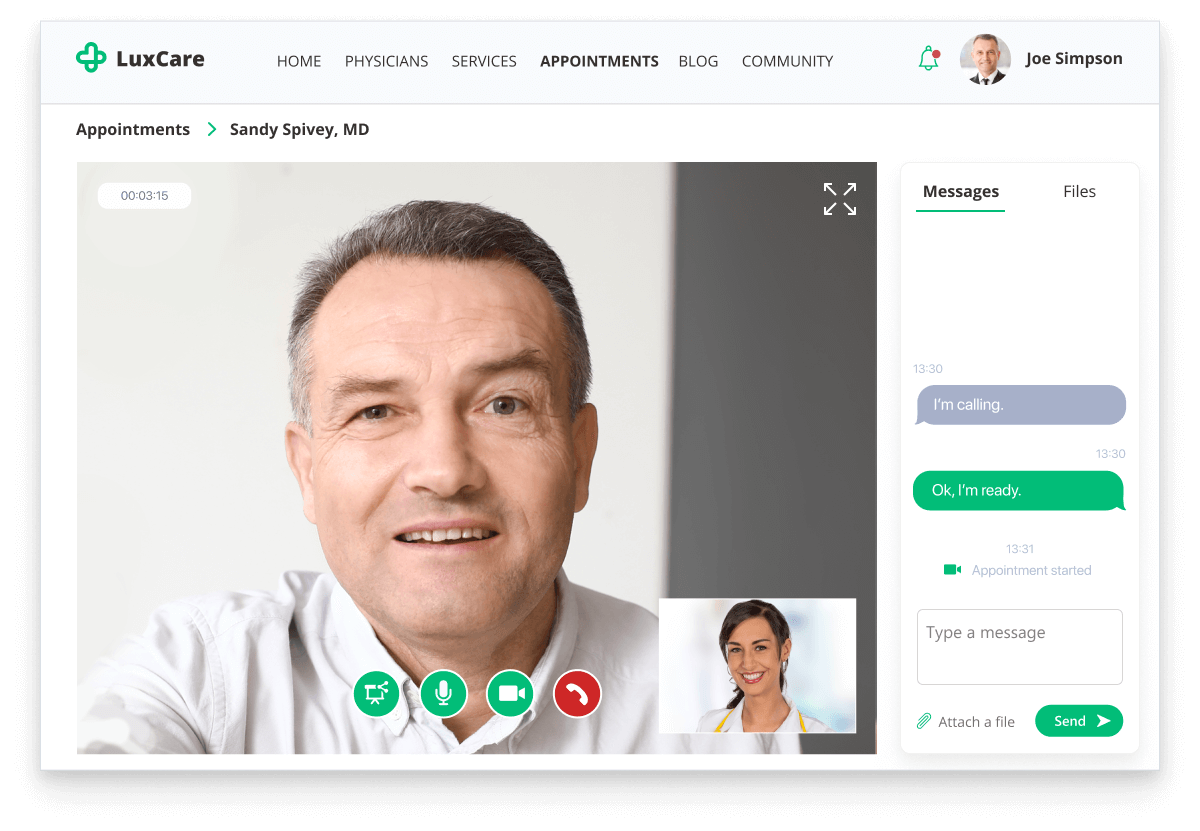
- Video consultations.
- Secure access to mental and behavioral health records.
- After-visit patient surveys.
- Support for patient engagement in research studies through a dedicated clinical trial portal.
-
Payment and insurance management for patients
- Access to bills and explanations of benefits, including billing codes (e.g., CPT) when supplied by EHR or payer.
- Online bill payment.
- Insurance coverage cases list.
-
Online patient requests
- Prescription refill requests.
- Medical procedure requests.
- Contact information, billing information, and health records update requests.
-
Portal administration
- Granting portal access to new users.
- Patients’ health and contact information editing.
- Upload of a user’s clinical documents obtained from other healthcare providers (e.g., CCDA visit summaries, when provided).


Examples of Patient Portal Functionality ScienceSoft Implements
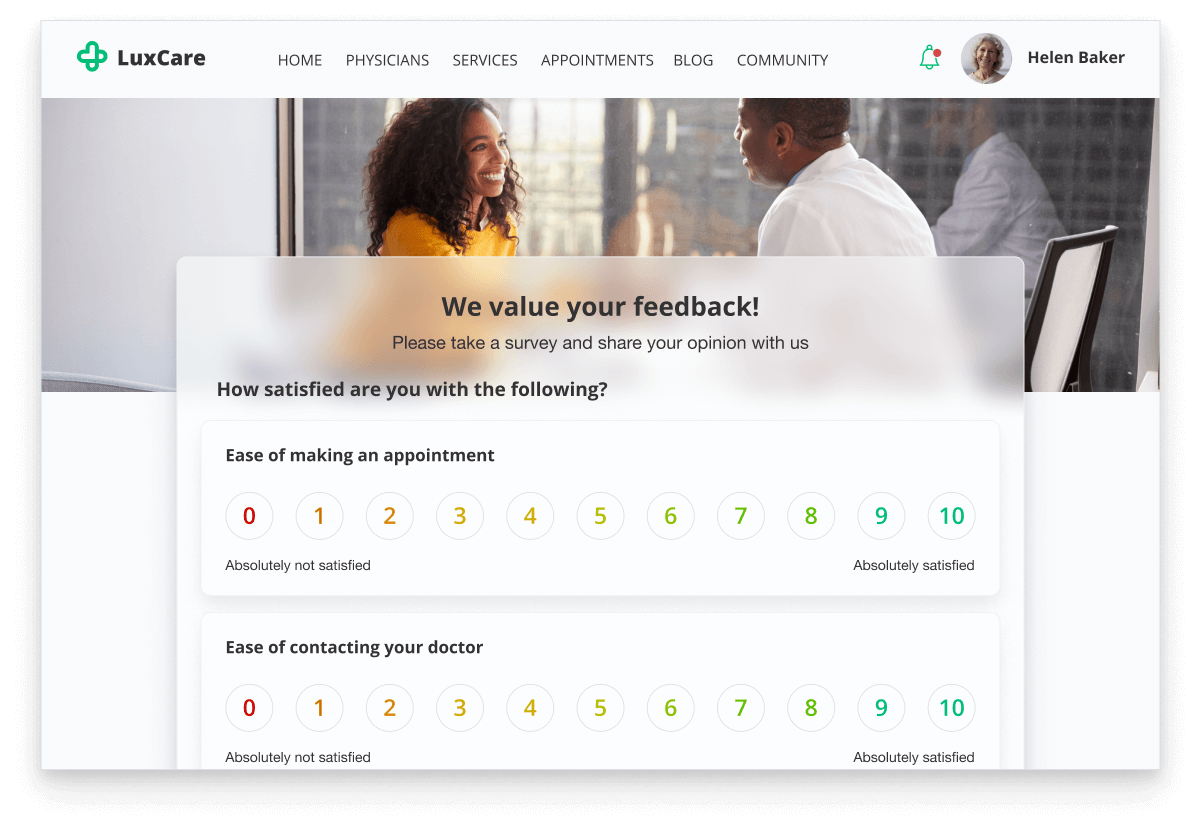
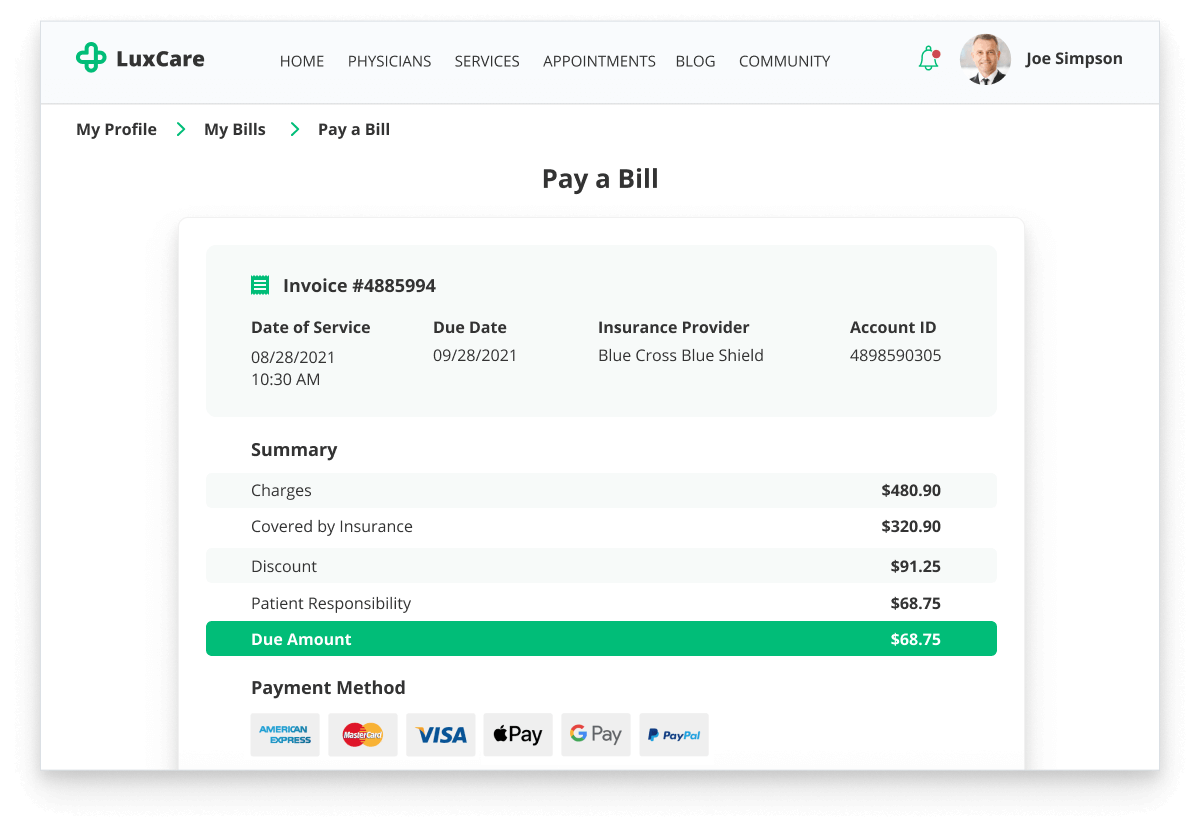
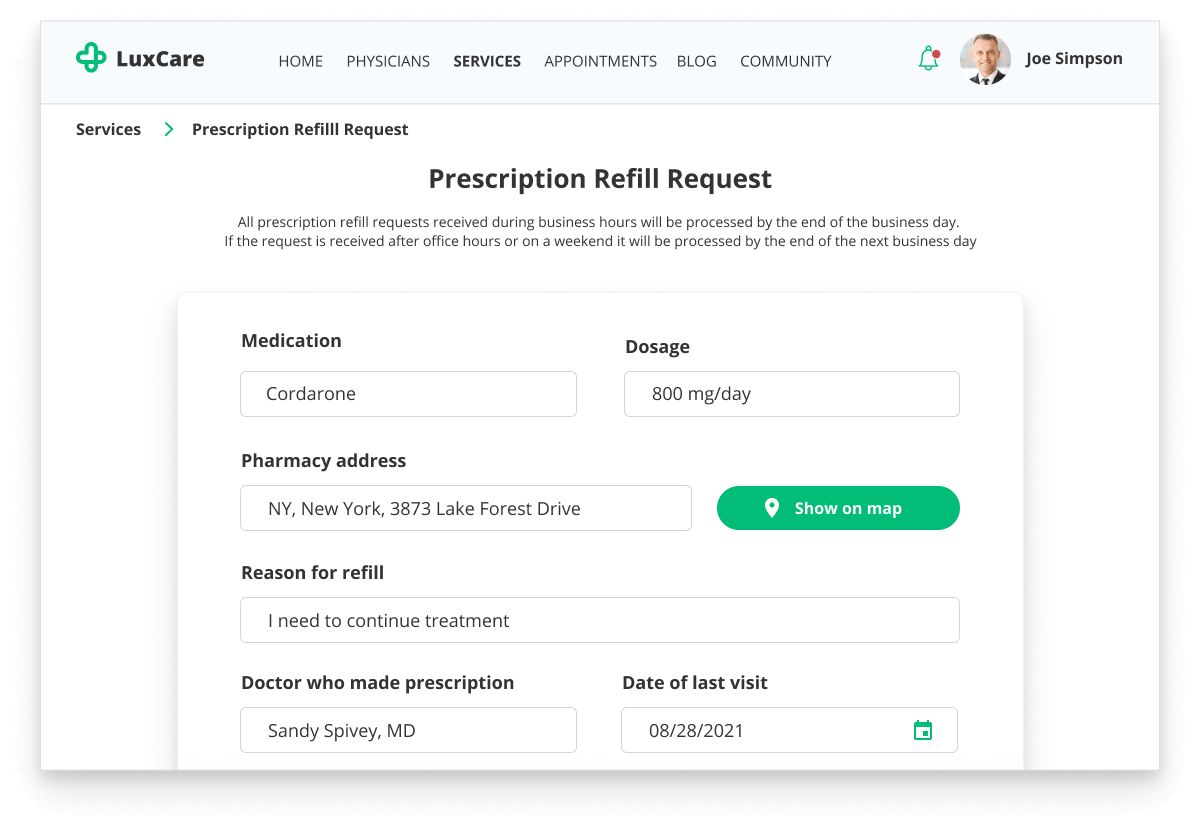
How AI Can Enhance Patient Portal Functionality
ScienceSoft can add custom AI modules to existing patient portals, integrate them with specialized AI services, or build new portals with AI capabilities from the start. Here are some of the functions we can implement.
-
Using retrieval-augmented generation (RAG), AI chatbots can answer questions about healthcare services, appointment procedures, and visit preparation based on approved internal knowledge. If a question falls outside the available information, the chatbot directs the patient to the appropriate staff.
-
Appointment booking and rescheduling
Dedicated scheduling assistants can understand patients' requests in natural language, check available appointments through integrated systems, and help patients book or reschedule visits according to predefined rules. This simplifies appointment management for patients and reduces the load on the front desk.
-
AI can summarize clinician-approved care instructions and turn them into personalized reminders displayed in the portal, such as when to schedule a follow-up visit or complete an ordered test. This helps patients keep track of their next steps after a visit and reduces the need for staff to send routine follow-up reminders.


Important Integrations
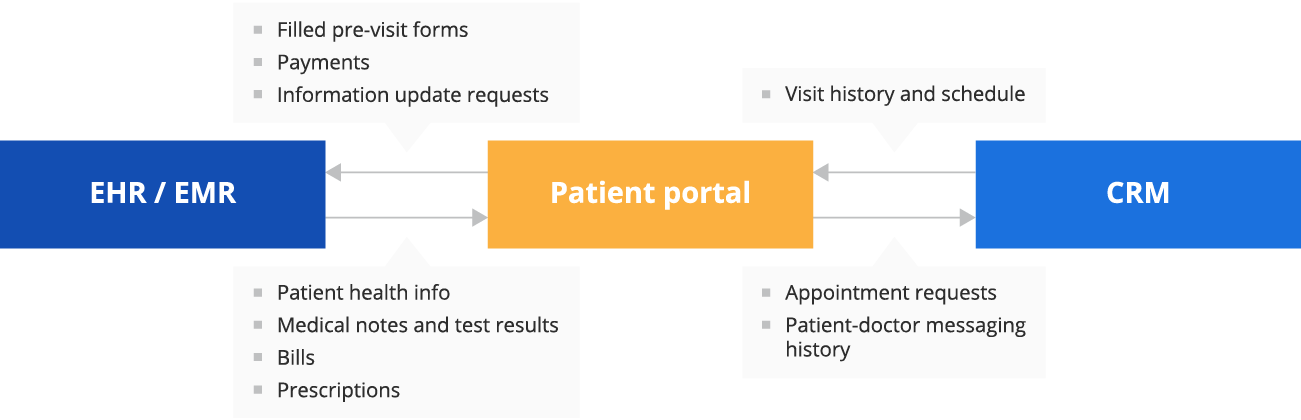
ScienceSoft’s experts recommend integrating a patient portal with EHR/EMR and CRM to enable a holistic patient health history view and eliminate the need for repetitive patient data entry into different systems. As a result, such integrations help healthcare providers reduce patient data management costs and prevent them from storing fragmented or duplicated information.
-
EHR / EMR (Electronic Health Records or Electronic Medical Records)
to share patients’ health history, treatment plans, and billing history in their personal portal accounts and pull patient-driven information (pre-visit information, payment updates, etc.) from the portal.
-
CRM (Customer Relationship Management)
or Call Center software, Practice Management System – to accumulate a patient’s visit history, health support requests and messaging history and provide personalized care options and service offerings.
Patient Portal Development Steps
- Analyzing the needs of your healthcare organization and patients to define key functions of a patient portal, decide on web or mobile development, and more.
- Creating patient portal requirements specification and tech design (including tech stack, FHIR APIs, USCDI-aligned data scope, integrations, etc.).
- Designing compliance roadmap for HIPAA, GDPR, 21st Century Cures Act, and other applicable regulations.
- Planning the UX of a patient portal.
- Designing attractive UI elements that follow the healthcare organization's brand book and are focused on ease of use and accessibility.
- Healthcare portal development and testing in iterations.
- Preparing user training materials for the roles within the healthcare organization and quick start guides for patients.
- Launching the patient portal.
- Supporting and maintaining the portal for impeccable patient experience.
What Determines a Patient Portal's Success
To make sure your healthcare organization gets the most value from a patient portal, ScienceSoft suggests you pay attention to:
-
Intuitive portal navigation
so that the portal can be used by expert and novice users alike.
-
Mobile optimization
to make sure patients can access the portal from various devices (smartphones, tablets, PCs) both at home and on-the-go.
-
Promotion of the portal
among patients as a central communication tool to take the load off a call center.

When a Custom Patient Portal Is Your Best Choice
ScienceSoft recommends healthcare providers opting for custom patient portals when they want to:
- Integrate the portal with multiple systems (EHR/EMR, CRM, hospital department systems such as RIS (Radiology Imaging System), marketing automation software, etc.) and especially with legacy solutions.
- Provide a branded UI that can be difficult or impossible to configure with out-of-the-box software capabilities.
- Leverage advanced patient engagement techniques (e.g., gamification elements, such as achievements, social media sharing options).
- Add telehealth functionality to take care of the patients remotely, including e-visits.
Patient Portal Software Costs

In ScienceSoft’s experience, the costs of custom patient portal development can range from $100,000 to $250,000+ and largely depend on the project specifics and required integrations (e.g., with EHR).
Need a patient portal cost estimation?
Discover Your Cost of Patient Portal Development
Please answer a few simple questions prepared by our medical IT consultants to help us understand your needs and calculate the cost of your patient portal more quickly.

Custom Patient Portal Development
Thanks to our 21 years of experience in healthcare web portal development, ScienceSoft knows how to make an efficient patient portal. Our mission is to empower project success despite time and budget constraints, as well as changing requirements.
-
Patient portal consulting
Our healthcare IT consultants:
- Analyze your patient interaction workflows.
- Define a portal’s features and tech stack, including data and terminology mappings (LOINC for labs, RxNorm for medications, SNOMED CT for conditions, ICD-10 for diagnoses).
- Develop a business case.
- Design a secure portal architecture and define necessary integrations.
- Deliver UX and UI mock-ups.
- Provide project pricing and timing estimation.
- Help comply with relevant regulations (HIPAA, HITECH, FDA, 21st Century Cures Act, NCPDP D.0, etc.).
-
Patient portal development
We provide:
- Portal consulting, design, and project planning.
- Patient portal software development and quality assurance.
- Portal compliance with applicable regulations.
- Integration with your EHR, CRM, Call center software, Practice Management System.
- User training.
- Continuous patient portal support and maintenance.


We worked with ScienceSoft on the refactoring and modernization of our telehealth web portal and a cross-platform patient application. During the project, we were impressed by their code analysis proficiency and in-depth knowledge of telemedicine specifics. ScienceSoft proved to be a reliable vendor with a solid healthcare background, and we recommend them to everyone looking for a telehealth software development partner.

Todd Nilson, MD, HealthPoint Plus

About ScienceSoft
ScienceSoft is an international AI transformation and software development vendor headquartered in Texas, US. Experienced in healthcare solutions, ScienceSoft advises on patient portal implementation and develops custom patient portals that bring value to healthcare providers and patients alike. We hold ISO 13485 certification proving we design and develop medical software according to the requirements of the FDA and the Council of the European Union.
